


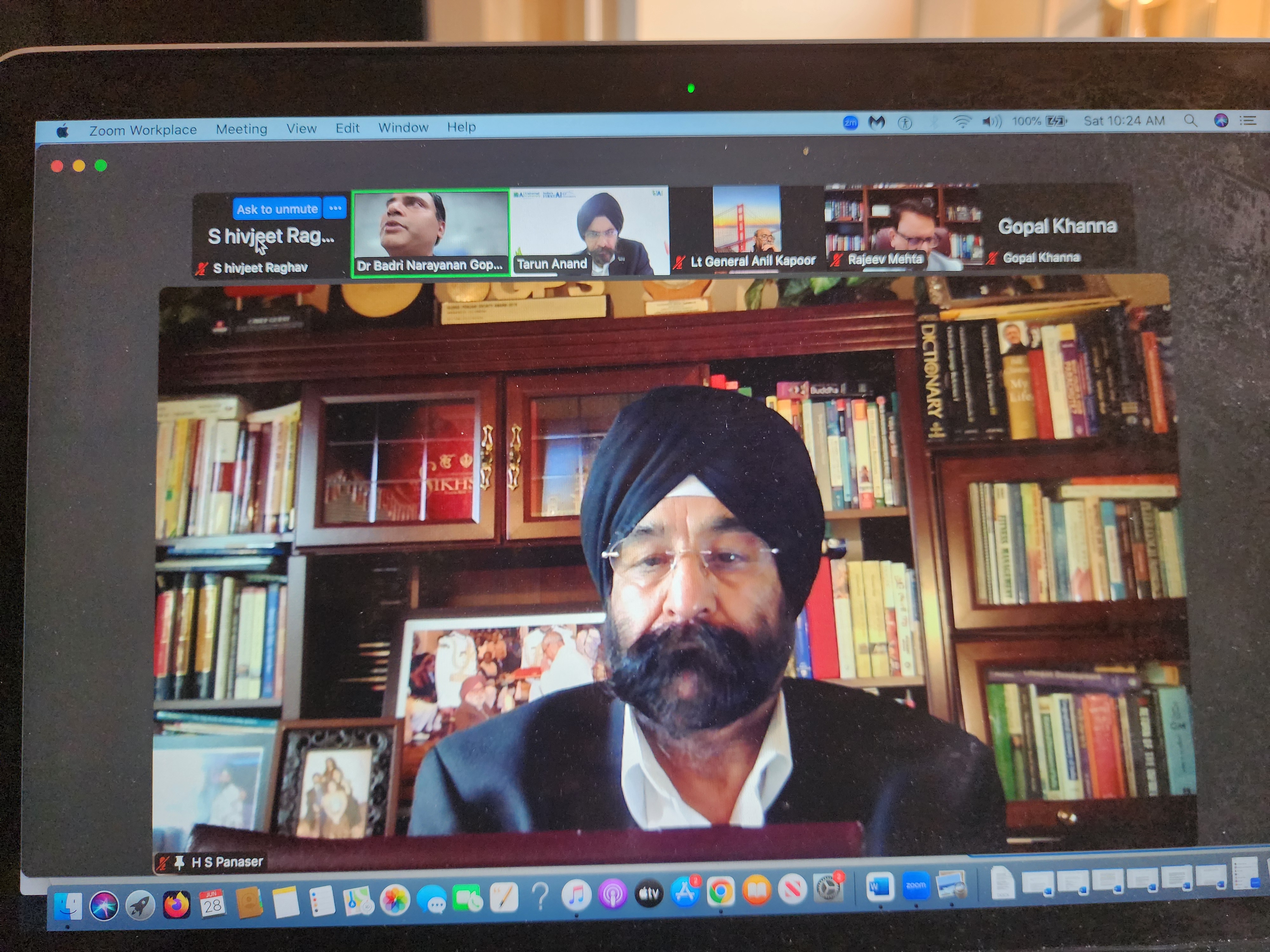
Photo Credit: Courtesy of Global Indian Trade and Cultural Council (GITCC)
New Jersey, USA – June 28, 2025 — The virtual event “Harnessing AI for Economic Growth: US and India Collaboration Opportunities” brought together leading voices from government, industry, and academia to chart a path forward for deeper AI collaboration between the United States and India. Organized by the Global Indian Trade and Cultural Council, USA (GITCC) in association with the Consulate General of India, New York, and the Global Indian Diaspora Alliance (Glo-India), the webinar went beyond the usual pleasantries, issuing a bold call for practical, accelerated cooperation in artificial intelligence.
The session opened with Lt. General Anil Kapoor (Retd.), former Director General of DGEME and board member of TIH, IIT Tirupati, who emphasized the transformational nature of AI, likening it to the advent of electricity in the Second Industrial Revolution. He stressed the critical convergence of quantum technology, semiconductors, sensors, and advanced communications such as 6G, all of which are poised to shape how AI impacts society and the workforce.
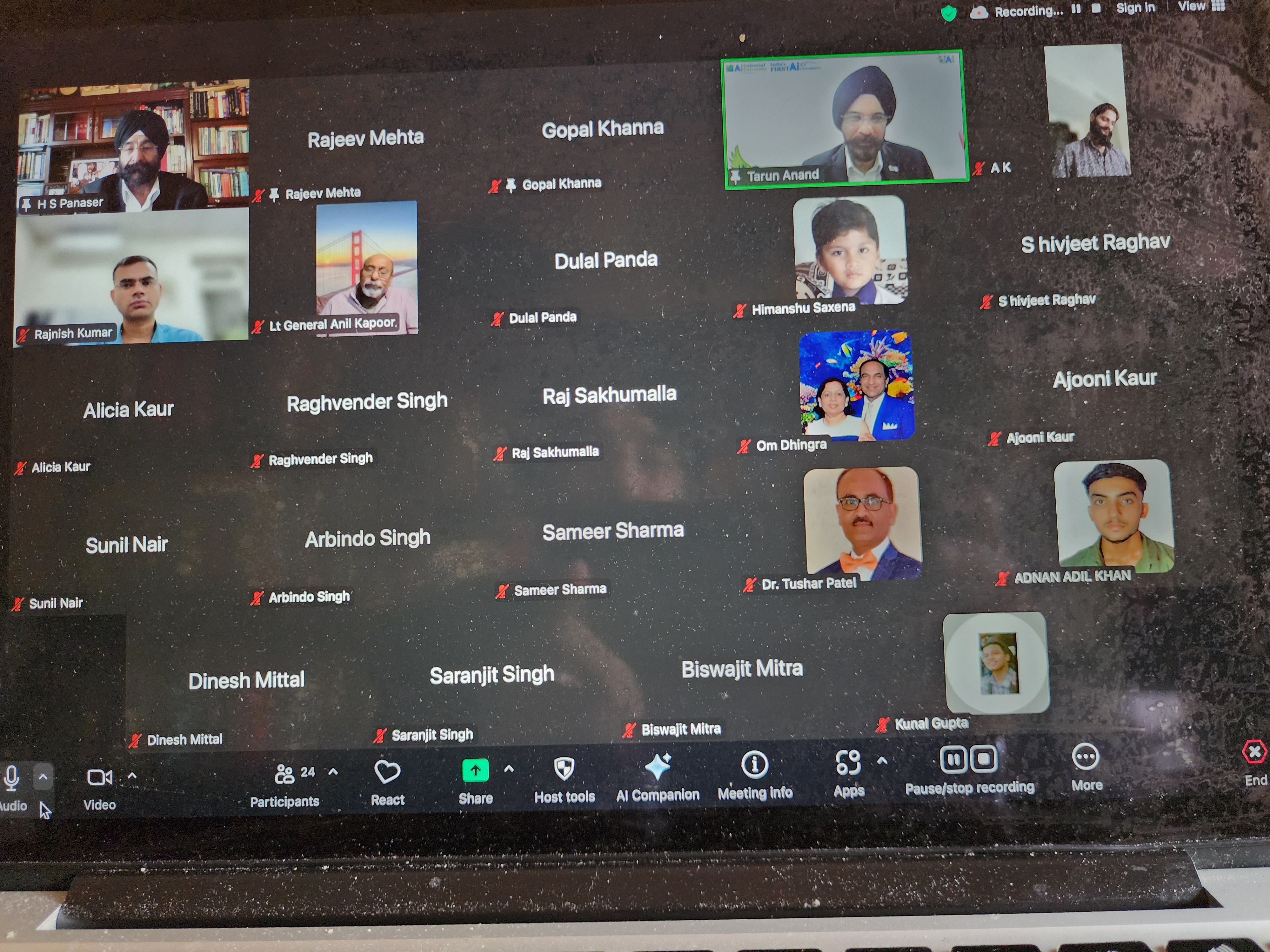
Mr. Gopal Khanna, Founder and Chair of the Health AI Institute, underscored the urgency of scaling business-to-business (B2B) and government-to-government (G2G) AI frameworks, noting that despite nine existing bilateral agreements, execution remains slow. Khanna called healthcare for underserved rural communities a top priority and proposed a “mutually assured survival” doctrine for democracies vulnerable to cyber threats.

Education and talent development were central themes in remarks from Mr. Tarun Anand, founder of Universal AI University. Anand highlighted India’s immense user base for AI tools like ChatGPT, yet cautioned that the nation still lacks critical infrastructure such as chips, data centers, and next-gen cloud platforms. He advocated for U.S.–India collaboration to bridge these gaps and presented live examples of AI-driven solutions his university is piloting to aid rural populations. Anand also warned of rising threats from deepfakes and cybercrime, urging for joint regulatory frameworks.
The pharmaceutical sector emerged as another key arena for AI innovation. Professor Dulal Panda, Director of NIPER Mohali, and Dr. Rajneesh Kumar, Associate Professor at IIT–BHU, demonstrated how AI is rapidly accelerating drug discovery—from five-year timelines to just 18 months. However, data hoarding by private firms was flagged as a major roadblock. Kumar called for federated data-sharing models to unlock life-saving innovation.
Adding a corporate perspective, Mr. Biswajit Mitra, Chief Monetary Officer at Cadila Pharmaceuticals, expanded the AI conversation beyond R&D. He stressed the need for AI-driven transformation in marketing, manufacturing, and supply chain operations, especially in India’s vital generic drug sector. Mitra called for direct U.S. involvement to help elevate Indian pharma to global standards.
A spirited discussion during the Q&A session addressed the ongoing “brain drain” dilemma. Dr. Saranjit Singh, former professor at NIPER, and Mr. Khanna proposed new government-backed programs that allow Indian experts abroad to remain connected while gaining global exposure before returning to take leadership roles. The issue of retaining experienced professionals post-retirement was also raised by Prof. Rajeev Mehta, Chair of Glo-India. GITCC Chairman H.S. Panaser pledged advocacy for flexible advisory and contractual roles for seasoned experts, declaring that “wisdom doesn’t expire.”
The event concluded with a resounding message: for the US and India to lead in the AI age, they must act decisively. This means closing infrastructure gaps, removing barriers to data sharing, and enabling dynamic public-private partnerships. The opportunity is no longer theoretical—it is a global imperative.
Related posts:
 Bollywood Star Tulip Joshi Crowns Winners at Miss Bharat NJ/NY 2025
 Indian-American Congressman Ro Khanna’s focus on fixing today’s version of capitalism
 Olivia and Liam Top U.S. Baby Name Charts for Sixth Year in a Row
 Happy Birthday Dev Anand! The evergreen hero is still fondly remembered ten years after his passing