


PHOTO: NASA
On February 13, 2025, President Donald Trump and Indian Prime Minister Narendra Modi, during an ‘Official Working Visit’ released a Joint Statement, a follow up of the Comprehensive Global Strategic Partnership, announcing a new initiative – the “U.S.-India COMPACT (Catalyzing Opportunities for Military Partnership, Accelerated Commerce & Technology) for the 21st Century” – to drive transformative change across key pillars of cooperation,” the White House announced.
It contained among other things, an initiative on space cooperation, which read as follows:
“The leaders hailed 2025 as a pioneering year for U.S.-India civil space cooperation, with plans for a NASA-ISRO effort through AXIOM to bring the first Indian astronaut to the International Space Station (ISS), and early launch of the joint “NISAR” mission, the first of its kind to systematically map changes to the Earth’s surface using dual radars. The leaders called for more collaboration in space exploration, including on long duration human spaceflight missions, spaceflight safety and sharing of expertise and professional exchanges in emerging areas, including planetary protection. The leaders committed to further commercial space collaboration through industry engagements in conventional and emerging areas, such as connectivity, advanced spaceflight, satellite and space launch systems, space sustainability, space tourism and advanced space manufacturing.”

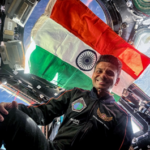
Despite delays, but with what some may say was a relatively quick implementation, almost exactly 5 months from that Feb. 13 Joint Statement, the Axiom 4 Dragon Mission to the International Space Station, which included Indian astronaut Shubhanshu Shukla, landed back on earth.
On July 15, NASA noted, “Axiom Mission 4 (Ax-4) splashed down in the Pacific Ocean at 2:31 a.m. PDT Tuesday ending a 20-day spaceflight that saw the private astronauts perform critical microgravity research aboard the International Space Station. Veteran astronaut Peggy Whitson, who has accumulated 695 days in space over five missions, led Pilot Shubhanshu Shukla and Mission Specialists Sławosz Uznański-Wiśniewski and Tibor Kapu back to Earth aboard the SpaceX Dragon spacecraft.”
ISRO called the collaborative mission “a vital stepping stone in building India’s own crewed mission operations infrastructure, enhancing readiness for future indigenous human spaceflight programs such as Gaganyaan and the Bhartiya Antariksha Station.”
On its website, ISRO has a blow-by-blow account of Shukla’s 20 days on ISS, including his adaptability, his experiments, and the outreach to students in India.
On his return, Shukla began undergoing a seven-day structured post-mission medical evaluation and recovery protocol under the supervision of Axiom Space and ISRO flight surgeons. That program includes cardiovascular assessments, musculoskeletal tests, and psychological debriefs aimed at ensuring full physiological recovery and data capture for future missions.

Throughout the Axiom-04 mission, as part of India’s participation a dedicated ISRO high-level delegation and Mission Operations Team was deployed to Kennedy Space Centre, Florida, which was led by the Chairman, ISRO and the Secretary, Department of Space, Dr. V Narayanan. The delegation participated in the launch operations, ISRO noted on its website. Initially, the launch was rescheduled multiple times due to technical issues including oxygen leakage in booster stage engine bay.
“On insistence of ISRO team, oxygen leakage issue was fully resolved leading to safe &successful launch,” ISRO said. Later, the delegation moved to the Johnson Space Center, Houston, to join in the docking operations.

The Mission operations team continued to stay in Houston, ISRO said, “gaining invaluable first-hand experience in managing human spaceflight operations.”
The team was embedded alongside NASA and Axiom flight controllers, participating in real-time decision-making, telemetry tracking, crew timeline management, and health monitoring of both the astronaut and the science payloads.
“This exposure provided critical insights into international crewed mission coordination, emergency response protocols, and the complexities of orbital operations,” ISRO noted.
NASA in one of its press releases noted that during the Axiom-04 Mission, the two space agencies participated in five joint science investigations and two in-orbit science, technology, engineering, and mathematics demonstrations. The Dragon spacecraft was expected to return to earth with more than 580 pounds of cargo, including NASA hardware and data from over 60 experiments conducted throughout the mission.
The Axiom-04 Mission collaboration is the pinnacle of US-India space research cooperation which has a much longer history. As NASA noted, “NASA and ISRO have a long-standing relationship built on a shared vision to advance scientific knowledge and expand space collaboration.”
NASA also noted that the collaboration between the two space agencies, allowed Axiom Mission 4 “to deliver on a commitment highlighted by President Trump and Indian Prime Minister Narendra Modi to send the first ISRO astronaut to the station.
Related posts:
 NASA to welcome 4th private astronaut mission which includes Indian astronaut, to International Space Station
 Axiom-4 Mission: A saga of 12 million kilometers and 282 orbits aboard ISS
 Axiom Mission 4 astronauts, including Shubhanshu Shukla, enter Space Station, begin research mission
 What makes Indian American astronaut Sunita Williams the icon she is